
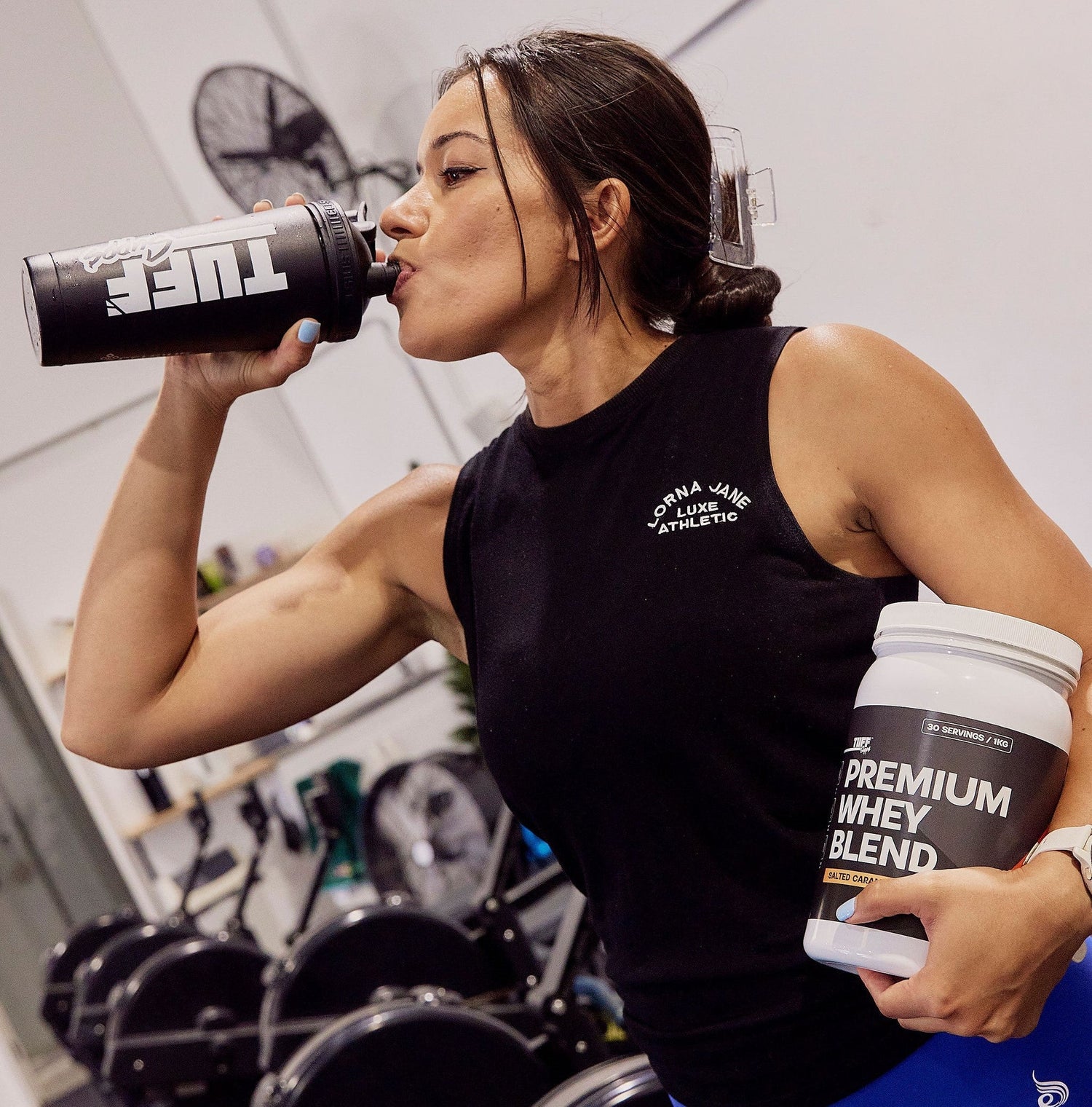
If your protein shake leaves you bloated, gassy or doubled over with stomach cramps, here's the good news: it's probably not you. It's what's on the label.
Most mainstream protein powders are built to a price, not to a stomach. That means cheap protein sources, artificial sweeteners and fillers that pad out the tub - and your gut is the one that pays for it.
At Tuff Supps we built our range around one simple idea: protein should be easy on the stomach AND taste incredible. Here are the five ingredients most commonly behind post-shake gut drama, why they cause trouble, and how we've kept them out of your tub.
1. Lactose — The Big One
If regular whey protein sits heavy, lactose is the most likely culprit. Roughly two-thirds of the world's adults have some degree of lactose malabsorption - the ability to digest milk sugar simply fades for many of us after childhood [1].
Here's what most tubs won't tell you: whey protein concentrate, the cheapest and most common form of whey, can carry a meaningful amount of lactose along for the ride. When that lactose reaches your large intestine undigested, gut bacteria ferment it - and the result is gas, bloating and that unmistakable post-shake gurgle.
Whey protein isolate is a different story. The extra filtration steps that concentrate the protein also strip out almost all of the lactose and fat. That's why our Premium Whey Protein Isolate is 99.9% lactose-free - grass fed, cold-processed, and filtered until what's left is protein, not milk sugar.
If you want the full breakdown, we've covered it in detail here: Whey Protein Isolate vs Whey Protein Concentrate.
2. Artificial Sweeteners and Sugar Alcohols — The Sneaky Culprits
Flip over a mainstream tub and you'll usually find sucralose or acesulfame potassium doing the sweetening - and in "sugar-free" formulas, sugar alcohols like sorbitol, xylitol or maltitol.
Sugar alcohols are well-documented gut troublemakers. They're poorly absorbed in the small intestine, where they draw in water and ferment - the classic recipe for bloating, cramps and worse. Food authorities even require warning labels about their laxative effect at higher doses [2].
The evidence on artificial sweeteners is more mixed, but some research suggests they can alter the balance of gut bacteria in some people [3]. Either way, if shakes leave you feeling off, they're an easy variable to remove.
Our approach is simpler: every Tuff Supps protein is sweetened with certified organic stevia. A leaf, not a lab. No artificial sweeteners and no sugar alcohols anywhere in the range.
3. Soy Protein — The Cheap Base
Soy protein is everywhere in budget plant blends for one reason: it's cheap. But it's also one of the allergens that Australian food labels are legally required to declare [4], and plenty of people who aren't allergic still find soy-heavy shakes hard on the stomach. Whole soy naturally contains fermentable carbohydrates like raffinose and stachyose - the same family of compounds that make beans famously gassy.
That's why our Plant Powered Protein contains zero soy. Instead, it's a Triple Plant Formula of yellow pea protein, rice protein and Australian-sourced faba bean protein. Because these are protein isolates, the fermentable carbs that cause trouble in whole legumes are largely left behind in processing - you get the protein without the party trick.
The result is 25g of clean plant protein per serve that's free from dairy, gluten and soy. It's also naturally easier to digest.
4. Cheap Fillers — The Label Padding
Maltodextrin. Dextrose. Skim milk powder. These ingredients exist to make a tub cheaper to produce, not better to drink - and they bring their own baggage. Milk powder adds lactose right back into products marketed as "high protein", and large hits of maltodextrin add osmotic load your gut has to deal with on top of everything else.
A quick test: count the ingredients on your current tub, then check how many of them are actually there for you rather than for the manufacturer's margin.
Tuff Supps proteins carry no fillers. Minimal ingredients, with the protein listed first - because it is first.
5. Low-Grade Whey Blends — When "Whey" Isn't What You Think
"Whey protein blend" can legally mean almost anything. Many budget tubs lean on low-grade concentrate that's as little as 34% protein - with lactose and fat making up much of the rest. That's how a "protein" shake ends up delivering a dose of exactly the milk sugars your stomach was trying to avoid.
We do it differently across the range:
- Premium Whey Protein Isolate - grass fed, cold-processed, 99.9% lactose-free. Three main ingredients.
- Rebuild Whey + Collagen - grass fed whey paired with 5g of collagen per serve for recovery, joints and skin.
- Plant Powered Protein - the Triple Plant Formula, zero soy, free from dairy and gluten.
Grass fed whey also brings higher levels of omega-3s and CLA than grain-fed alternatives - a nice bonus on top of a cleaner label [5].
How to Pick a Protein That Won't Bloat You — The 60-Second Label Check
Standing in front of a wall of tubs (or twelve open browser tabs)? Run any protein powder through this checklist before you buy:
- If you're buying whey, buy isolate. Look for "whey protein isolate" as the first ingredient and a lactose claim you can hold them to - ours is 99.9% lactose-free.
- Check the sweetener. Stevia or monk fruit beat sucralose and acesulfame K, and steer clear of sugar alcohols (anything ending in "-itol") if you're prone to bloating.
- Going plant-based? Check the base. Pea, rice and faba bean isolates are naturally easier going than soy-heavy blends - and if soy is a problem for you, it must be declared on the label by law.
- Count the ingredients. Minimal ingredients with protein listed first beats a long list padded with maltodextrin, dextrose or milk powder. No fillers is the standard to hold them to.
- Look for named sources, not "proprietary blends". If a tub won't tell you which proteins are inside and how much, assume the answer is "the cheap ones".
Any tub that passes all five is worth a try. Ours pass by design.
The Bottom Line
Bloating after a protein shake isn't something you just have to put up with. In most cases it comes down to five things: lactose, artificial sweeteners and sugar alcohols, soy, fillers, and low-grade blends.
We built Tuff Supps to be the tub you don't have to think twice about - easy on the stomach, big on taste, with a label you can actually read.
And if your stomach disagrees with us? Every order is backed by our 110% money-back guarantee. Try it, and if it's not the smoothest protein you've had, we'll give you your money back and then some.
Shop the Tuff Supps range now →
References
- Storhaug CL, et al. "Country, regional, and global estimates for lactose malabsorption in adults: a systematic review and meta-analysis." The Lancet Gastroenterology & Hepatology, 2017.
- Food Standards Australia New Zealand (FSANZ) - labelling requirements for polyols and their laxative effect.
- Suez J, et al. "Artificial sweeteners induce glucose intolerance by altering the gut microbiota." Nature, 2014. (Findings are debated; individual responses vary.)
- Food Standards Australia New Zealand - Plain English Allergen Labelling (PEAL): soy is a mandatory declared allergen.
- Benbrook CM, et al. "Enhancing the fatty acid profile of milk through forage-based rations." Food Science & Nutrition, 2018.
0 comments